Rosa Schmitz · 2 September 2026
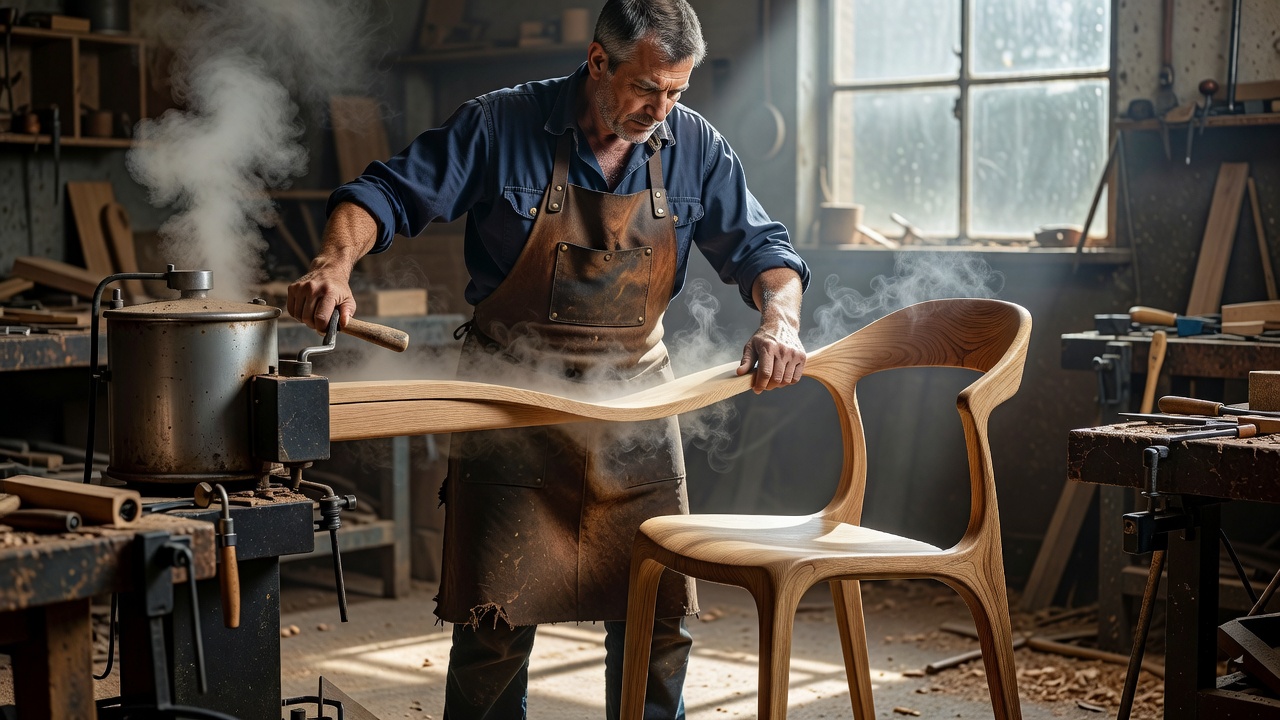
Shapewood Woodworking artisan Michael Harlan has introduced an updated steam-bending process that reduces material waste while increasing the structural integrity of chair components. The method was developed over three years of controlled testing at the company's Vermont workshop and focuses on precise moisture control combined with variable pressure application.
Traditional Challenges in Steam Bending
Steam bending has long been used to shape hardwood for furniture frames, yet conventional approaches frequently result in inconsistent curves and internal fractures. Harlan noted that older techniques relied on uniform steam exposure times, which often left thicker sections under-saturated and prone to splitting during clamping. Temperature fluctuations in the steam chamber also contributed to variable lignin softening, leading to higher rejection rates during quality checks.
Harlan's team addressed these issues by installing sensors that monitor internal wood moisture in real time. The new protocol adjusts steam duration based on species density and board thickness, allowing each piece to reach optimal pliability without excess water absorption. Additional refinements include segmented clamping forms that apply graduated pressure, reducing stress concentrations at the apex of each bend.
Benefits of the New Technique
Early production runs show a 27 percent decrease in rejected chair legs and backrests compared with prior methods. The chairs also demonstrate improved resistance to seasonal humidity changes, with follow-up tests indicating less than 1.5 millimeters of movement after six months of exposure. Harlan attributes these gains to the controlled cooling phase, which locks the wood fibers in their final shape more effectively than air-drying alone.
The process remains compatible with standard oak, ash, and walnut stock used by Shapewood. No chemical additives are introduced, preserving the natural appearance and finish compatibility of the wood. Harlan plans to document the full procedure in an internal manual so that other workshop staff can replicate the results consistently across future chair models.
Customers ordering custom seating will notice tighter joint fits and smoother transitions at curved elements, according to preliminary feedback from the first batch of completed pieces. The technique is now being integrated into the standard production workflow for all steam-bent chair frames.