Tina Keller · 2 September 2026
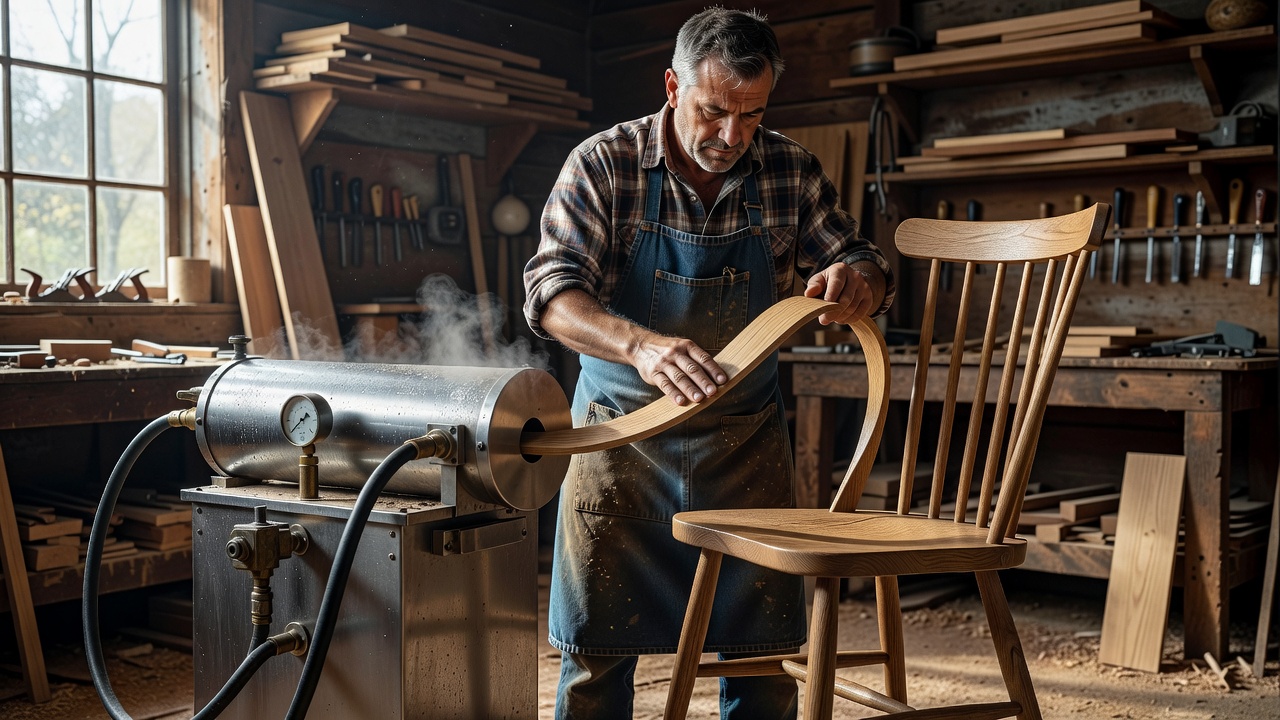
An experienced artisan has introduced a novel steam-bending technique specifically tailored for the production of Shapewood chairs. This development comes after extensive research and testing at the Shapewood Woodworking workshop. The method enhances the flexibility of wood while minimizing defects commonly associated with traditional approaches. In the world of woodworking steam bending has long served as a key process for creating curved elements in furniture. The artisan focused on improving consistency across batches of hardwood.
Traditional Steam Bending Limitations
Steam bending has been a staple in woodworking for centuries allowing craftsmen to create curved components without cutting across the grain. However challenges such as uneven heating excessive drying times and potential for wood splitting have persisted. In chair manufacturing these issues can lead to higher costs and lower yields. The artisan's work focuses on optimizing the steam chamber design and introducing controlled pressure during the bending phase. By monitoring moisture levels more accurately the new process ensures that the wood reaches the ideal pliability state. This reduces the risk of breakage during bending. Tests on various hardwoods used in Shapewood products have shown promising results with success rates improving significantly. Multiple iterations were conducted starting from small scale experiments and progressing to full sized chair parts. Factors like steam type exposure duration and form design were refined using digital monitoring tools for precision.
Benefits for Chair Design and Production
The implications for Shapewood chairs are substantial. Designers can now incorporate more complex curves leading to improved comfort and aesthetic appeal. Production efficiency is expected to rise as less material is wasted. The artisan has shared that the method involves a proprietary sequence of steaming bending and cooling that can be replicated in other workshops with proper training. Further refinements are underway to adapt the technique for different chair models. Industry observers note that such innovations could influence broader woodworking practices. The focus remains on sustainability as the method uses less energy compared to conventional methods. Overall this advancement positions Shapewood Woodworking at the forefront of artisanal furniture making while maintaining high standards of craftsmanship and material integrity across all produced items.