Rosa Schmitz · 2 September 2026
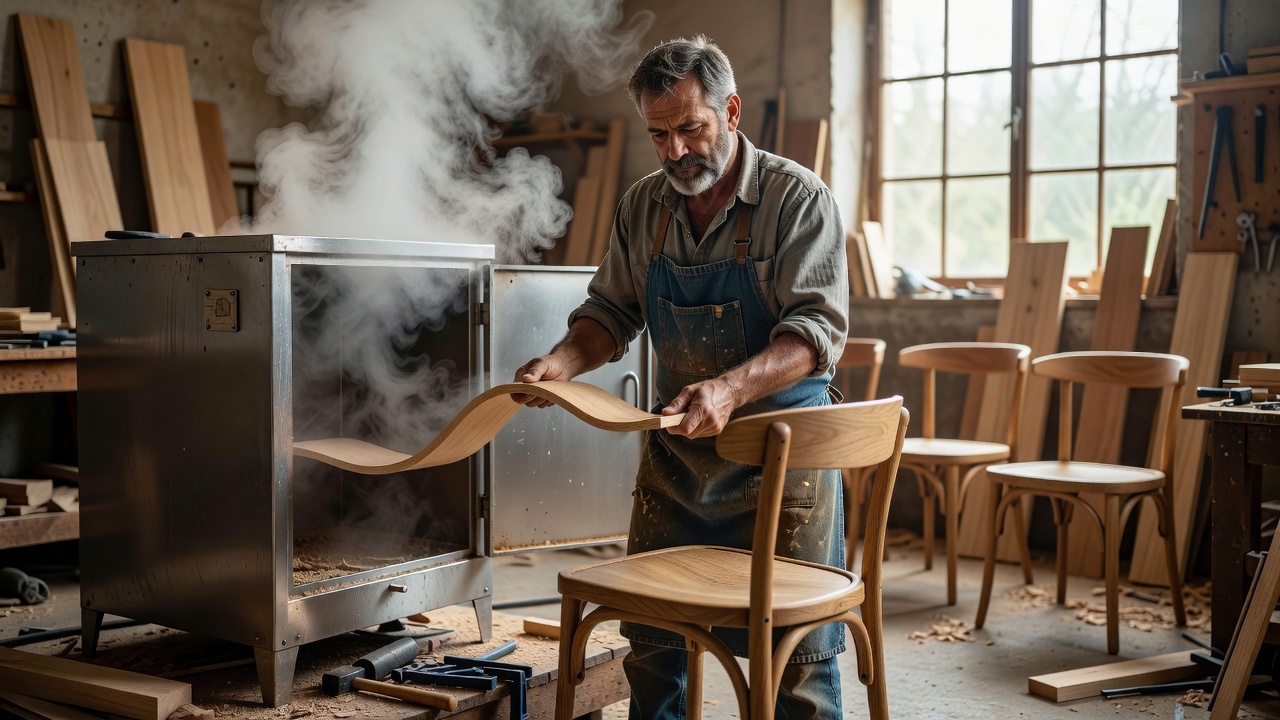
Local artisan at Shapewood Woodworking has introduced a novel approach to steam-bending wood, promising improved results for chair manufacturing. This development comes after years of experimentation with various timber types and bending techniques.
Traditional Steam-Bending Limitations
Steam-bending has long been a staple in woodworking, allowing craftsmen to create curved components without cutting across grain. However, traditional methods often lead to inconsistencies in bend radius and material strength. Wood species like oak and ash are commonly used, but they require precise control of moisture and heat to avoid cracking. Moreover, environmental factors such as ambient temperature can affect outcomes, making consistency difficult in non-climate-controlled spaces. Challenges include the time-consuming process of soaking wood in steam chambers and the risk of breakage during bending. Artisans have sought ways to enhance efficiency while maintaining the aesthetic and structural integrity of the final product.
Breakthrough in Bending Process
The new method incorporates a controlled pressure system combined with modified steam temperatures tailored to specific wood densities. This allows for tighter curves in chair legs and backs, reducing waste and production time significantly. Tests show that chairs produced using this technique exhibit greater durability under stress. The artisan emphasizes the importance of sustainable sourcing, noting that the method works well with locally harvested hardwoods. Implementation at the workshop involves custom-built equipment that monitors humidity levels in real time. This precision has opened possibilities for more intricate designs in future furniture lines. The method also reduces energy consumption by optimizing steam usage, aligning with eco-friendly goals of the company. Colleagues in the industry have expressed interest in adopting similar practices following demonstrations. Feedback from initial prototypes indicates high customer satisfaction with the comfort and style of the new chair models. Further refinements are planned, focusing on scaling the process for larger production runs without compromising quality. The artisan's work highlights ongoing innovations in traditional crafts.